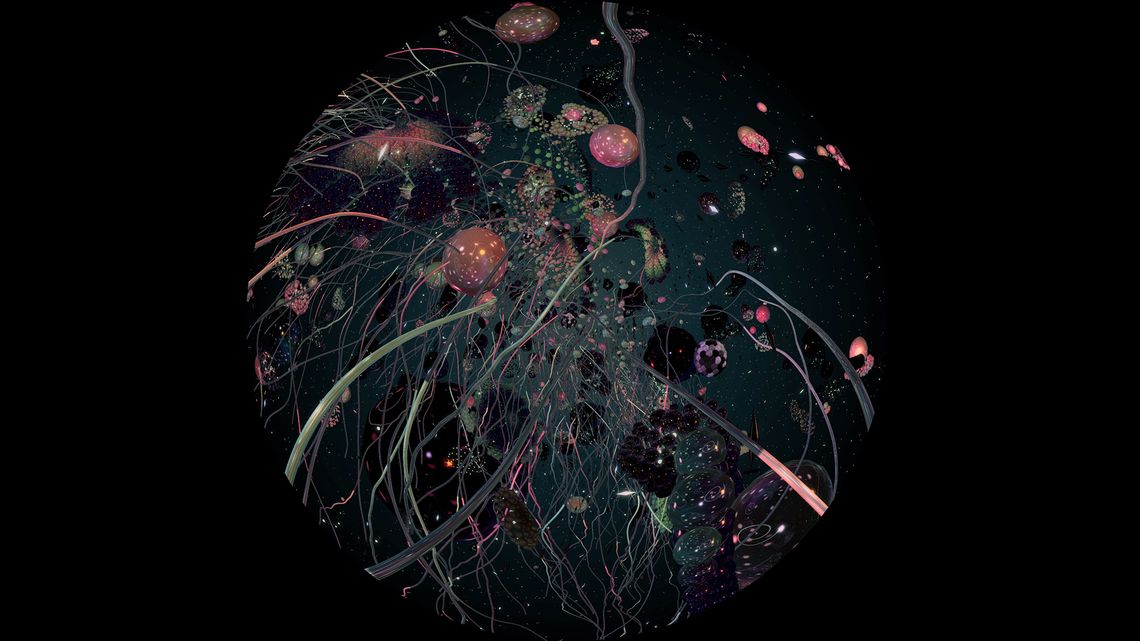
ARIMA è una performance audiovisiva immersiva in formato fulldome, in cui visualizzazioni spazializzate generate in tempo reale esplorano i modelli statistici di serie temporali e gli errori di previsione che ne derivano. Il progetto mette in evidenza, su una scala più ampia, la relazione ciclica tra modelli economici obsoleti e l'emergere di nuovi paradigmi.
Utilizzando software in tempo reale, l'opera genera grafici e cluster di punti dati che si evolvono, si riconfigurano e si riorganizzano. Queste visualizzazioni ricreano il processo di modellazione algoritmica dell'ARIMA (AutoRegressive Integrated Moving Average), un modello statistico comunemente impiegato per prevedere tendenze economiche. Ogni "cluster" di punti rappresenta un modello economico specifico, con trasformazioni visive che riflettono l'evoluzione e l'instabilità dei sistemi economici.
Attraverso la reinterpretazione artistica del modello ARIMA, il progetto interroga e ridefinisce l'utilità di questa regressione statistica, tradizionalmente usata a fini predittivi e analitici. Da un lato, conferisce nuovo significato alla formazione economica dell'artista, liberandola dagli obiettivi utilitaristici per trasformarla in uno strumento di creazione artistica. Dall'altro, mette in discussione l'effettiva capacità dei modelli economici di rendere conto della complessità del mondo: sono davvero in grado di catturare la dinamicità dei sistemi, o sono semplici semplificazioni riduttive? È proprio questa limitazione a giustificare la loro trasformazione in un'opera artistica. Distaccandosi dagli obiettivi predittivi e analitici, ARIMA offre una riflessione radicale su questi strumenti, creando uno spazio in cui l'instabilità e l'imprevedibilità dei fenomeni economici non sono solo rappresentate ma vissute e percepite attraverso un'esperienza sensoriale e immersiva.
Le visualizzazioni prodotte dal progetto sono luminose, iridescenti e lucide, con punti dati e grafici che ricordano oggetti decorativi in stile rococò. Ogni punto, lontano dall'essere un mero dato, si trasforma in un gioiello digitale. I modelli economici non vengono quindi rappresentati come curve fredde su un grafico, ma come oggetti delicati e mutevoli, quasi fragili.
L'originalità del progetto risiede anche nella natura interattiva e partecipativa della performance. Non si tratta di una semplice proiezione di dati su una cupola, ma di un'opera che invita l'artista a giocare un ruolo attivo modulando le visualizzazioni in tempo reale. L'artista utilizza un Wii remote e un controller MIDI per manipolare direttamente i visual, liberando il processo creativo dai vincoli dello schermo e del mouse tradizionali. A seconda dei gesti e delle azioni dell'artista, i punti dati cambiano colore, forma e movimento, creando composizioni visive in costante evoluzione che dialogano con l'ambiente sonoro.
Questo approccio corporeo e intuitivo riflette l'idea che l'economia, spesso percepita come una scienza fredda e analitica, è prima di tutto un sistema vivente e in movimento, influenzato da fattori umani e sociali. Attraverso l'uso di controlli fisici piuttosto che di comandi tradizionali, ARIMA sottolinea l'aspetto umano del processo economico, troppo spesso ridotto a numeri e modelli astratti. Questa dimensione tattile e interattiva rafforza l'idea che i sistemi economici siano fluidi, malleabili e soggetti a influenze esterne imprevedibili, proprio come le visualizzazioni in tempo reale che l'artista manipola.